Why Australian skin needs a different rulebook
Importing a northern-hemisphere routine into an Australian year is how men end up shiny in March and cracked in July. Start with the continent, not the aisle.
Mara Keating · · 11 min read
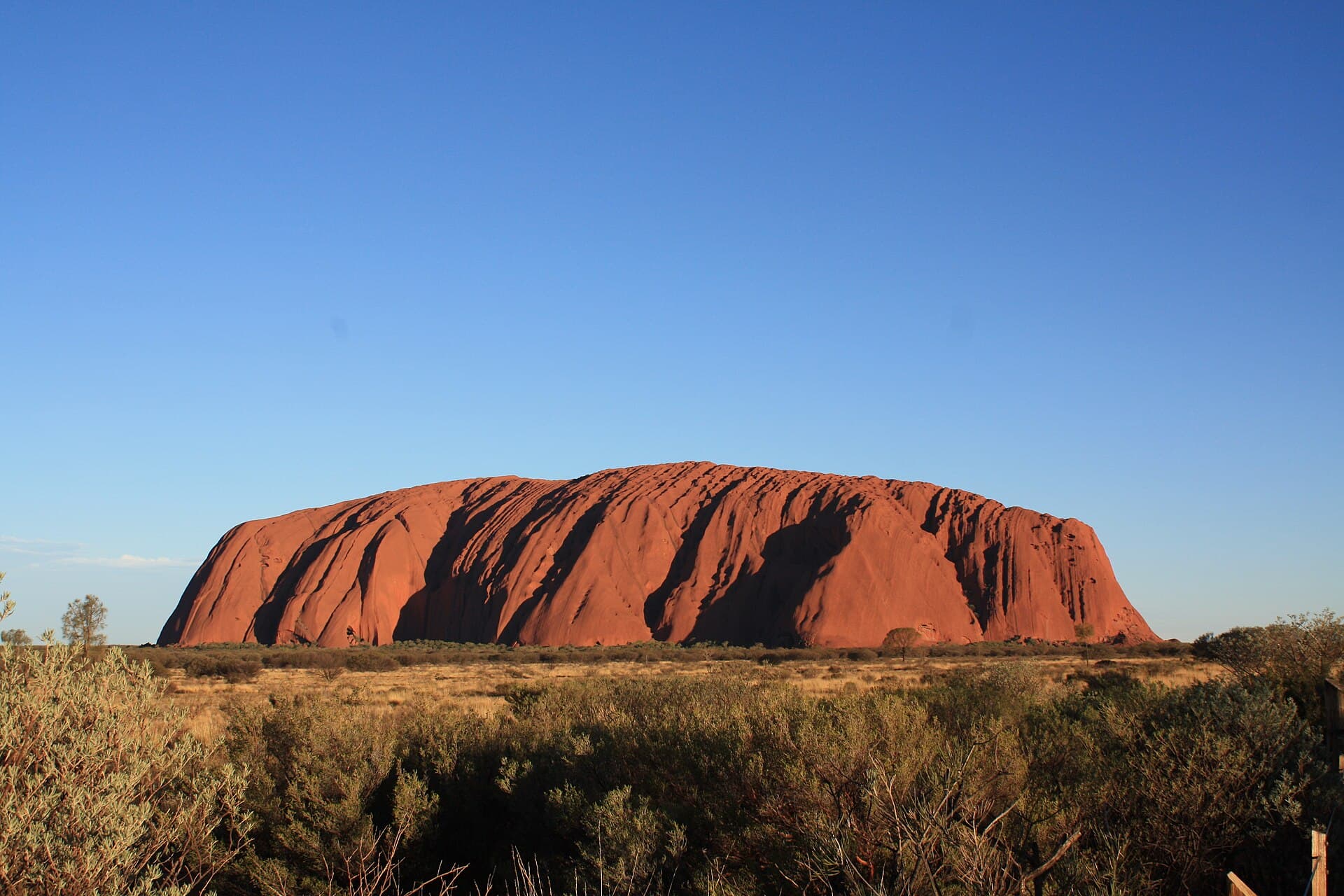
Image: Uluru sunset — Wikimedia Commons, CC BY-SA. See all image credits.
The original eshu site put the whole argument in a paragraph. If a moisturiser could keep a face honest under Australian sun, inland wind and a northerly that feels like a hairdryer, it would work in almost any city on the map. That was not marketing poetry. It was a climate note.
Most of the world's skincare copy is written for rooms that never see a UV index of 11, for winters that are wet rather than desiccating, and for commutes that do not include a west-facing car park in February. Bring those instructions here unchanged and you will over-cleanse in the wet season, under-moisturise in an office that never opens a window, and treat sunscreen as an optional beach product.
This essay is the house rulebook. Not a shopping list. A way of looking at the year.
The continent writes first
Australia is the driest inhabited continent. That sentence is used so often it has gone stale, but skin still believes it. Low ambient humidity inland pulls water out of the stratum corneum. Coastal humidity does the opposite in the air and then betrays you with salt, sweat and air-conditioning the moment you step inside. Ultraviolet radiation is higher, for longer, than the latitudes that invented most moisturiser textures.
Add the ozone story we grew up with. The slip-slop-slap campaign exists because childhood burns here are not a European summer anecdote. They are a public-health file. A regime that treats SPF as the last step of a ten-product routine will lose to a regime that treats SPF as the first non-negotiable after a rinse.
If you only change one mental model, change this: your skin is in conversation with weather, not with a Northern Hemisphere blog. The Climate & Skin hub exists for that reason.
Four Australian climates on one face
A man who flies Perth to Broome to Melbourne in a fortnight does not have one skin type. He has one face meeting three envelopes.
The dry inland. Alice, Broken Hill, the long stretch of the Stuart Highway. Relative humidity can sit in the teens. Lips crack. Knuckles look ten years older than the person attached to them. A gel moisturiser that feels elegant in Sydney will vanish before lunch. You want occlusive enough to slow water loss — not a grease slick, a cream that still sits there after a northerly.
The tropical north. Darwin, Cairns, Broome in the build-up. Sweat is constant. Fungal nasties love a neck under a high-vis collar. Cleansing has to actually cleanse, then get out of the way. Heavy night creams become a heat rash. See beard care in heat and humidity if you insist on keeping the beard through November.
The southern coastal. Bondi in a north-easterly, the Great Ocean Road in a south-westerly. Salt, wind and a UV index that does not care that the air is 19 degrees. After-surf care is its own essay; the short version is rinse, a bland moisturiser, and sunscreen still on the days you swear it is winter.
The office everywhere. Air-conditioning is the fifth climate. It is why a man can live in Brisbane and still get winter hands in July. We wrote that up properly in winter offices and air-conditioning damage.
What to steal from the old eshu idea
The 2011 site was not ashamed of being simple. Local ingredients that had been used for a very long time. A scent that refreshed and then got out of the way of your cologne. Packaging that did not waste the last teaspoon. A sentence aimed at men who would not read a paragraph about ceramides.
We still think that is the right register. The simple regime is two or three steps you will actually repeat: cleanse when you are dirty, moisturise when the air is stealing water, protect from UV every day you can see daylight. Exfoliate on a schedule, not as punishment. See a GP when the shelf is not the tool.
Native botanicals belong in this rulebook only when they earn the inch on the label. Kakadu plum is an antioxidant story, not a miracle. Macadamia oil is a lipid that happens to grow here. Tea tree is a useful antiseptic with a talent for irritation if you treat it like holy water.
A year, not a routine screenshot
January and February are UV and sweat. Keep textures light. Wash after sport. Do not add a new acid in a heatwave.
March and April are the trap. The air cools, the UV does not retire. Men put the sunscreen back in the beach bag and wonder why the nose keeps peeling.
May to August in the south is wind, heaters and office air. This is when a cream with a bit of occlusive in it stops being "too much". It is also when lips and the backs of hands tell the truth.
September to November is wind plus rising UV. If you live with grass and a history of hay fever, the face can look inflamed when it is actually allergic. Do not invent a new fungal story before you have thought about pollen.
The north has a wet and a dry, not four Instagram seasons. Build the year around monsoonal humidity and the dust that follows.
What we are not asking you to buy
A different rulebook is not a different ten-step. It is a refusal to copy a routine written for Seattle in October. If your current two products survive a week in Mildura in January, keep them. If they do not, change texture and SPF habit before you change brand loyalty.
We are a journal. We will tell you when a tradie needs more than a face moisturiser, when FIFO travel wrecks a routine, and when a GP is the next step. We will not sell you a bottle.
The continent is the editor. Listen to it first.
Questions we keep getting
- Do I need different products in Darwin and Hobart?
- You need different habits more than different brands. Darwin asks for lighter textures, more frequent cleansing after sweat and a ruthless sunscreen. Hobart in July asks for a cream that stays put in wind and a heater that is not pointed at your face.
- Is Australian skin a medical type?
- No. It is a climate type. Fitzpatrick scale still matters for burn risk. The rulebook changes because of UV, wind, salt, inland dryness and air-conditioning, not because of a unique national epidermis.