Skin on the tools: tradies, salt, cement and sun
Occupational skin is not a spa story. Cement, solvent, salt and a six-hour UV shift need hygiene, barriers and a lower bar for the clinic.
Priya Nair · · 12 min read
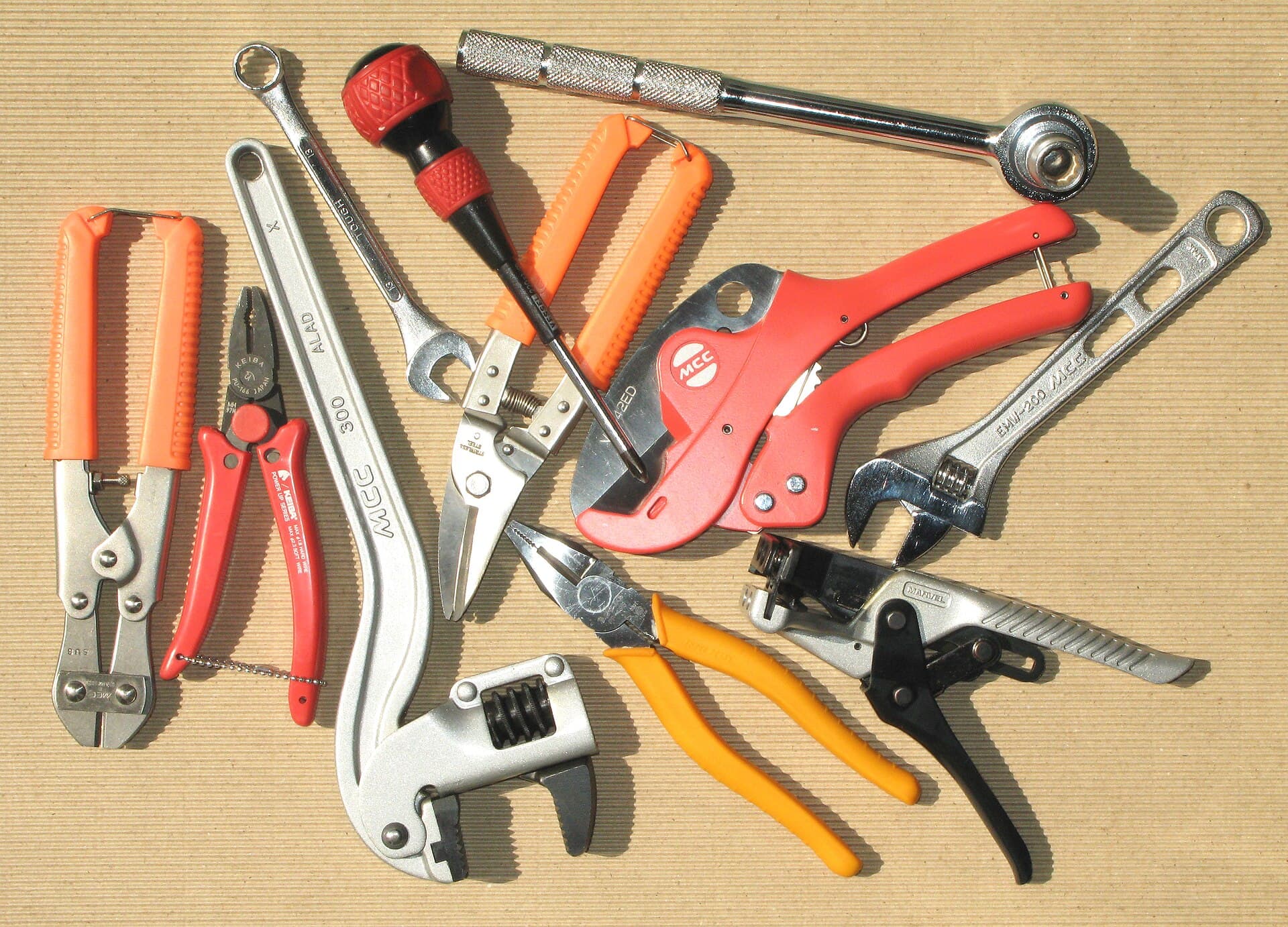
Image: Hand tools — Dennis Hill, CC BY 2.0. See all image credits.
A lot of skincare copy assumes a bathroom and a calendar. A lot of Australian skin assumes a site, a boat, a trench, a roof. Cement draws water out of hands. Solvents strip. Salt sits. UV writes the rest on the left arm and the back of a neck. The original eshu voice — no-nonsense, climate first — is closer to a toolbox talk than to a spa menu. This is that talk.
If you want the indoor version, see offices. If you want the travel version, see FIFO kits. This is the dirt version.
The four occupational insults
Cement and lime are alkaline. They burn slowly. Wet cement in a boot or a glove is a medical story if you ignore it. Rinse. Change the glove. Cream. If the burn is on, do not be a hero.
Solvents and degreasers take sebum with the grease. Use the right cleaner for the part, then a mild wash for the person. Never use the workshop can on a face. We have already written that sentence in the cleanser essay. It still needs writing.
Salt and fibreglass and dust are mechanical. They sit in creases. Rinse as soon as you can, not at the end of a ten-hour day if a hose is available at smoko.
Sun is the one that will still be on you at sixty. Hats that are actually hats. Shirts that are actually sleeves. SPF on the bits that remain visible, reapplied, stored off the dash. The UV essay is not written for office lunch breaks only.
Gloves are skincare
A glove that fits, is intact, and comes off at smoko so the hand can dry is worth more than a serum. A glove worn wet is a blister machine. Cotton liners under rubber help some trades and annoy others; try them before you sneer.
Barrier creams have a place before the insult, not as magic. They are easier to sell than they are to apply well. If you use one, use it on clean, dry skin and do not pretend it replaces a glove where a glove is required.
The end-of-shift regime
Wash with something that matches the dirt. Cream while damp, especially hands, neck, ears, the V. Look at your arms in daylight once a week. Photograph anything that is changing.
If you shave at night, you give nicks a chance to settle before the next insult. Shaving in camp water is its own file.
Do not sleep in the shirt you welded in. This is hygiene, not lifestyle.
When the job has already written on you
Knuckles that split every winter. A dermatitis that flares on Monday and eases on leave. A white spot, a crusty ear, a lip that will not heal. These are occupational health, not character. Tell the supervisor if the glove supply is a joke. Tell a GP if the skin is. Workers' compensation exists because skin is an organ that goes to work with you.
Infections in a split knuckle can travel. Red streaks, fever, a hand you cannot close — that is not a tomorrow problem.
Culture
The culture says stop being precious. The culture also says go home with ten fingers and a face that will still photograph at Christmas. Those are the same culture if you let them be. A tube of cream in a ute is not a personality change. It is maintenance, like oil.
The field notes hub exists because a regime that cannot survive a site is a hobby. Pack the boring kit. Use the hose. Wear the hat. Book the spot. That is the whole toolbox talk.
Apprentices, pride and the first good hat
The first year on the tools is when habits set. If the older hands wear sleeves and cream, the younger ones will. If the older hands treat a burn as comedy, the younger ones will collect one. Pride is a poor PPE.
Buy the apprentice a hat that does not make them look like a mascot, a sunscreen they will finish, and the permission to rinse without a punchline. That is culture. It is also how a trade keeps a workforce that can still close a fist at fifty.
If you are the older hand, have the mole checked and say so out loud. Screening is easier to copy than a speech. The job will still be there after the appointment. The spot might not be if you wait for Christmas.
A week of doing it, not decorating it
The useful test is seven days, not a new bottle. Write the weather in the morning — hot, dry, humid, recycled — and match the texture you already own. If you add anything, add it on day one only, and leave the rest of the cabinet alone so you can tell what changed.
Keep a photograph in the same bathroom light on day one and day seven. Not for social media. For honesty. Tightness, shine, a rash, a nick that will not settle: those are data. If the week is worse, stop the new thing. If the week is calmer, you have a habit, not a personality.
Carry the smallest version of the habit out of the house. A cream in a bag beats a perfect bathroom you do not visit at lunch. A hat on the seat beats a speech about UV. A hose, a tap, a rinse: the unglamorous verbs still do the work the aisle keeps trying to rename.
Tell one other person the plan if you live with them. Shared soap and shared towels will undo a careful face. Shared cream at the sink will save a pair of hands. This is not intimacy advice. It is logistics.
Workdays will try to steal the plan. A meeting runs late, a site has no tap, a roadhouse soap is a joke. That is why the plan has to be small enough to survive a bad Tuesday. Two steps plus sunscreen will travel. A ten-step will stay in the bathroom and sulk.
On the weekend, resist the urge to "catch up" with a peel, a device, or three natives at once. Catching up is how faces go red before a Monday. Repeat the weekday verbs. If you have sport, rinse sooner. If you have a long drive, wear the sleeve. If you have a roster, pack the pouch before you are tired.
If at any point the skin becomes a story you would not tell a barber — spreading, bleeding, changing, painful, febrile — you are no longer in a journal. You are in a waiting room. Take the timeline. Take the bottle. Leave the forum theories in the car.
The rest is repetition. Climate first. A wash that ends. A cream that matches the air. A sunscreen you will finish. Native ingredients that survive a label reading. Paid words declared, with rel=sponsored where money sat down. That is enough week, and enough continent, for this essay to end on.
Questions we keep getting
- What should be in a site wash kit?
- A cleanser that lifts grease without being a solvent, a bland cream, SPF that will be reapplied, gloves that fit, and the prescribed tube if you have one. Lemon sport gel is not a kit.
- Is cracked skin just part of the job?
- It is common. It is not compulsory. Barrier cream, gloves, and a GP for anything that weeps or infects will keep you on the tools longer.