Bushfire smoke, pollution and the skin barrier
Smoke days are not a skincare trend. They are an air-quality event. Here is what to do with a face when the hills are the colour of a bruise.
Mara Keating · · 11 min read
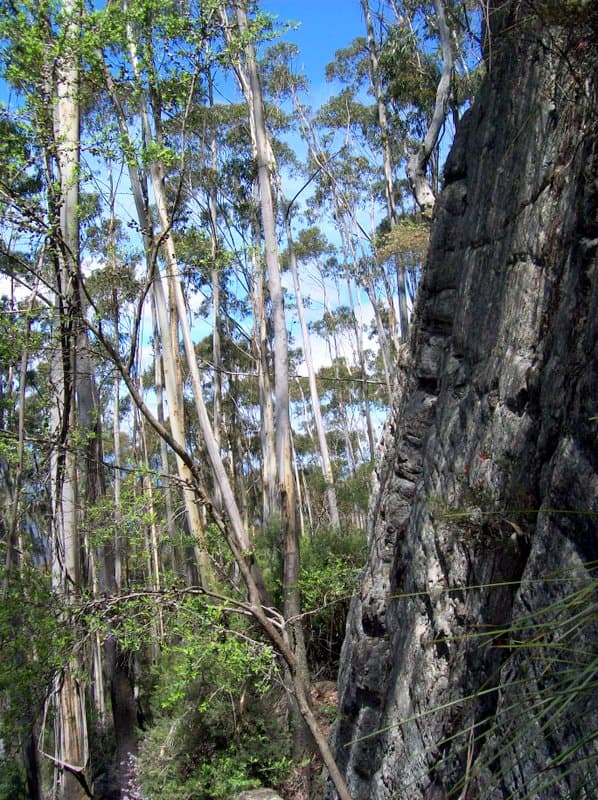
Image: Mt Imlay and white ash — Poyt448 Peter Woodard, CC BY-SA 3.0. See all image credits.
In the summer of 2019–20 a lot of Australians learned the colour of their own suburbs with the sun cancelled. Skin was not the headline — lungs, firegrounds, animals and the people who would not come home were the headline — but faces still itched, eyes still crusted, and a generation of men discovered that "pollution" was not only a Shanghai story.
This is not a wellness essay. It is a hygiene essay for days when the air-quality index is doing something ugly, whether the cause is a fire north of town, hazard reduction that drifted, or a brown inversion over a city.
What lands on a face
Smoke is a mix of gases and fine particles. The particles sit in the sebum and in the water you did not know was on your skin. They are irritating. They are not a moral failing. Combined with heat, wind and the dry air that often rides with a fire weather day, they leave a barrier that is both dirty and thirsty.
Urban pollution is quieter: diesel, brake dust, the particular filth of a freeway run. Same logic, smaller daily dose. If you cycle into the CBD you already know the colour of a night-time cleanser.
Do not confuse this with a need for a "detox". The liver is not waiting for a clay mask. The job is mechanical removal and then putting water and lipid back.
The smoke-day regime
Follow the health advice first. Windows shut when you are told. Masks that actually filter if you must be outside. Exercise indoors. This is a lung day that happens to include a face.
Cleanse once, properly, when you get in. A mild cleanser, not a scourer. You are lifting particles, not sanding a deck. See face wash versus cleanser if you are still using a kitchen-grade bar because it feels manly.
Moisturise on damp skin. Barrier first. A bland cream. If you are also in dry inland air or an office desert, lean richer. If you are in a humid coastal smoke haze — it happens — keep it light so you do not stew.
Eyes and lips have no barrier to speak of. Rinse. A sterile moisturising drop if you already use one. A plain occlusive on lips. If eyes keep streaming or vision changes, that is not a serum; that is a pharmacist or a clinic.
Do not exfoliate on the worst days. You do not need help being permeable. Save the acids for a week the hills are a normal colour. Exfoliation without sandpaper can wait.
What about "anti-pollution" marketing
The aisle grew a new vocabulary after those summers. Some of it is ordinary moisturiser with a longer paragraph. Some of it includes film-formers that make a face feel coated, which can be useful under makeup and annoying under a helmet. Antioxidants such as vitamin C have a real literature for photodamage; they are not a forcefield against a plume.
If you already use a vitamin C in the morning under sunscreen, you may keep it. If you do not, a smoke week is a bad week to start an irritant. Kakadu plum is an antioxidant story we tell honestly in the botanicals hub. It is not a bushfire plan.
Sunscreen still matters. Fire weather days are often high UV days. Pair this with the daily habit.
Clothes, hair and the house
A face is not the only surface. Hair holds smell and particles; wash it. Pillowcases take whatever you brought to bed. A damp cloth on a window sill is folklore; a closed window and a decent filter, if you have one, are engineering.
If you worked on a fireground or a dirty roadside, you are in field notes territory: rinse as soon as you can, look after the creases, and do not be a hero about itching that turns into infection.
When to get help
Wheeze, chest pain, a child who cannot settle, or a known asthma that is rising — none of that is dermatology. Call the health line your state runs, or emergency services if you must. For skin: spreading redness, pus, a rash that blisters, or lips that swell. The GP essay exists so we can say this once and mean it.
A journal cannot put water on a ridge. It can tell you not to add a ten-step while the sky is the wrong colour. Clean, cream, stay in. That is the whole smoke file.
After the plume, the ordinary week
When the hills return to a normal colour, do not reward yourself with a peel. The barrier has been working. Give it bland care for a few days. Wash the house textiles you can stand to wash. Open windows when the app says the air is actually better, not when you are simply sick of being inside.
City pollution on ordinary Tuesdays is a smaller, longer version of the same file. If you run or cycle along a freeway, shift the route when you can, or pick the hour the traffic thins. Wash when you get in. That is the whole anti-pollution routine that does not require a new word.
Communities that live with regular hazard-reduction smoke already know the drill and do not need a journal to discover resilience. What they may need is the reminder that children, elders, and people with asthma own the plan, and that a face cream is not a substitute for a cleaner air shed. We will keep the skin advice short so the health advice stays first.
A week of doing it, not decorating it
The useful test is seven days, not a new bottle. Write the weather in the morning — hot, dry, humid, recycled — and match the texture you already own. If you add anything, add it on day one only, and leave the rest of the cabinet alone so you can tell what changed.
Keep a photograph in the same bathroom light on day one and day seven. Not for social media. For honesty. Tightness, shine, a rash, a nick that will not settle: those are data. If the week is worse, stop the new thing. If the week is calmer, you have a habit, not a personality.
Carry the smallest version of the habit out of the house. A cream in a bag beats a perfect bathroom you do not visit at lunch. A hat on the seat beats a speech about UV. A hose, a tap, a rinse: the unglamorous verbs still do the work the aisle keeps trying to rename.
Tell one other person the plan if you live with them. Shared soap and shared towels will undo a careful face. Shared cream at the sink will save a pair of hands. This is not intimacy advice. It is logistics.
Workdays will try to steal the plan. A meeting runs late, a site has no tap, a roadhouse soap is a joke. That is why the plan has to be small enough to survive a bad Tuesday. Two steps plus sunscreen will travel. A ten-step will stay in the bathroom and sulk.
On the weekend, resist the urge to "catch up" with a peel, a device, or three natives at once. Catching up is how faces go red before a Monday. Repeat the weekday verbs. If you have sport, rinse sooner. If you have a long drive, wear the sleeve. If you have a roster, pack the pouch before you are tired.
If at any point the skin becomes a story you would not tell a barber — spreading, bleeding, changing, painful, febrile — you are no longer in a journal. You are in a waiting room. Take the timeline. Take the bottle. Leave the forum theories in the car.
The rest is repetition. Climate first. A wash that ends. A cream that matches the air. A sunscreen you will finish. Native ingredients that survive a label reading. Paid words declared, with rel=sponsored where money sat down. That is enough week, and enough continent, for this essay to end on.
Questions we keep getting
- Should I buy an antioxidant serum for smoke season?
- Not first. First: stay indoors when the app says to, rinse the day off, moisturise, and look after eyes and lips. A new bottle will not outrun an air-quality index of 200.
- Is city pollution the same as bushfire smoke?
- Both load particles onto skin. Smoke days are more intense and often shorter. Traffic pollution is the weekday drip. The hygiene response is similar; the health response to smoke includes lungs, not just cheeks.