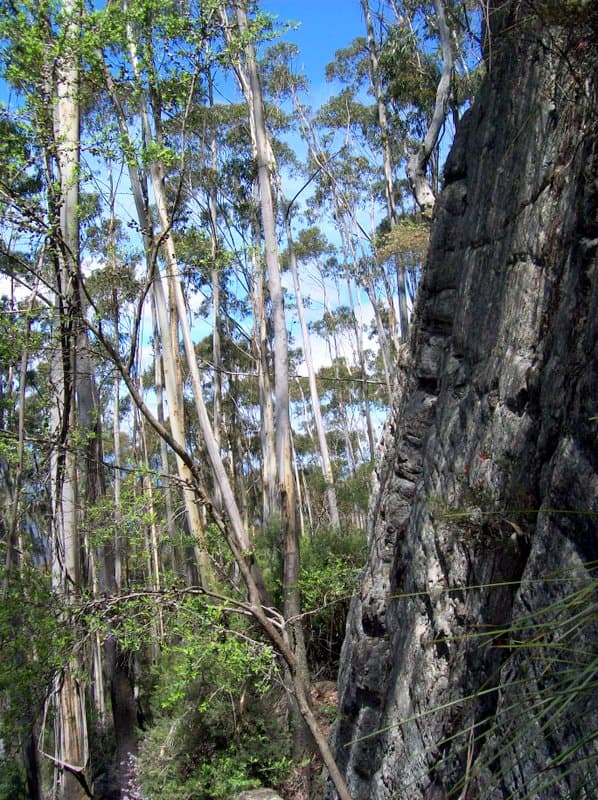
Dry inland air versus coastal humidity
The same face can fail in Broken Hill and steam in Ballina. Here is how to change texture, not identity, when you move between dry inland air and the coast.
Mara Keating · · 11 min read
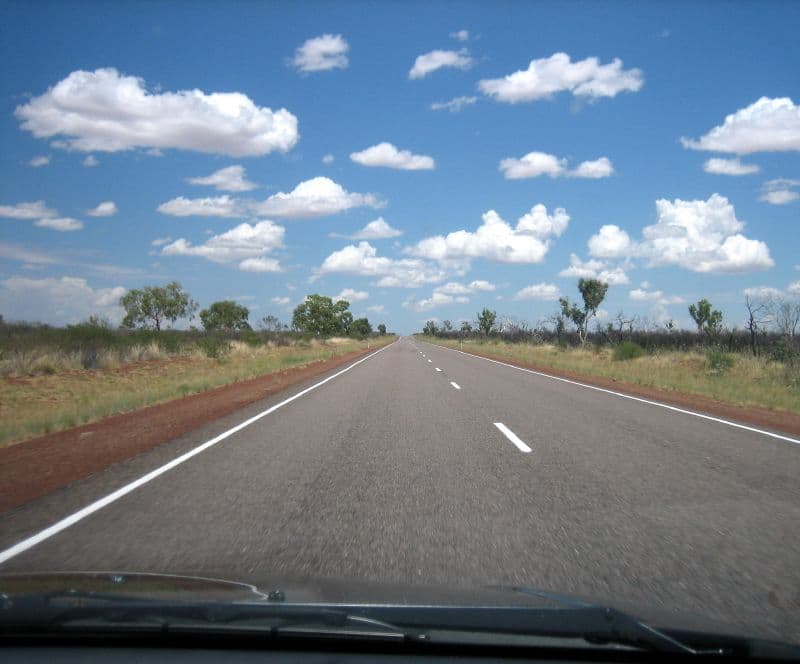
Image: Stuart Highway — Prince Roy, CC BY-SA 2.0. See all image credits.
Drive the Stuart Highway and you can feel the air change in the sinuses before the radio station does. Coastal humidity is a wet woollen jumper you cannot take off. Inland dryness is a file. Both are normal Australian weather. Neither cares what the back of your moisturiser bottle promised a buyer in a temperate city.
The mistake is to pick one texture for life. The original eshu idea — built for the harshest version of the country — still holds as a design brief. Day to day, you still have to answer a simpler question: is the air stealing water, or is the air refusing to let sweat leave?
What dryness actually does
The outer skin is a brick-and-mortar wall. The bricks are cells. The mortar is lipids. Water sits in and between them. When ambient humidity drops, water evaporates faster than you replace it. The wall looks tight, then flaky, then finely cracked. It stings when you shave. It makes a mockery of a gel.
Inland towns, high plains and air-conditioned rooms in any city can all produce this. Canberra in July is an inland experience even if you can see a lake. A FIFO donga with the air-con roaring is inland-on-demand.
The fix is unglamorous. Shorter, cooler showers. A cleanser that does not squeak. Moisturiser on damp skin. Something with an occlusive streak at night. Hands get their own tin because they wash more than the face and they meet cement, paper and steering wheels. See hands, neck and the bits the mirror forgets.
Do not add alcohol toners "for pores". You do not have a pore emergency. You have weather.
What humidity actually does
On the coast, and in the tropical north, the air is already full of water. Your sweat cannot evaporate as cleanly. Seams of clothing stay wet. A beard becomes a climate of its own. Folliculitis and tinea like this weather more than they like your new oil.
Here the failure mode is residue. A rich cream that saved you in Broken Hill will sit on the surface in Ballina and collect dust. You want a cleanse that removes salt and sunscreen, a light moisturiser so the barrier does not bounce into over-production, and fabric that dries. Beard care in heat is mandatory reading if you are keeping facial hair through a build-up.
Humidity also lies about UV. A grey, sticky day at the Twelve Apostles can still burn a scalp. Pair this essay with the daily moisturiser habit.
A practical split
If your lips crack before lunch: treat the day as inland. Cream, not gel. Humidify the bedroom if you can keep the tank clean. Ease off acids. Shave less often or change to a milder soap. Drink water because you are a mammal, not because a brand said so — it will not replace a moisturiser, but it will stop you adding thirst to the file.
If your T-zone shines and your neck itches: treat the day as coastal. Gel-cream. Wash after sport and after a day in salt. Wash pillowcases. Do not pile on oils because an influencer in a dry city said your barrier was "stripped". It is more likely busy and damp.
If you commute between the two: keep both textures in the bag. This is not decadence. It is how FIFO kits should be packed. The face you have on Sunday night in Broome is not the face you take into a Perth office on Wednesday.
Hard water makes both worse
A lot of inland water is hard. So is a surprising amount of coastal bore water. Minerals bind with soap and leave a film that feels like dryness even when you are not in a desert. If your cleanser never quite rinses clean, the water is in the story. A final rinse with a splash of bottled water sounds precious until you have spent a week in a mining camp. More useful: a non-soap cleanser and a moisturiser that can sit on whatever the tap left behind. Shaving in Australian water goes deeper.
What not to do
Do not "train" your skin by withholding moisturiser inland. That myth has a long half-life and no physiology. Do not assume a coastal breakout is "toxins leaving". It is usually sweat, product and a follicle. Do not buy a device. Buy two textures and a habit of looking at the weather the way farmers already do.
The Climate & Skin hub is organised around this split because it is the split that wrecks imported routines. Once you can name the air, the aisle gets quieter.
Houses, heaters and the overnight test
Overnight is when you notice which air you actually live in. A bedroom with a heater on and a window shut is inland, wherever the postcode. A bedroom with a fan and a wet towel on the chair is coastal, even in a dry town. Put the cream on before sleep as a test. If you wake tight, you needed more occlusive or less heat. If you wake shiny and itchy, you needed less oil or more wash.
Plants and bowls of water are charming and rarely enough. A sealed room with a running split-system will win. If you can set the system to a less aggressive dry, do. If you cannot, the cream is your lever.
Children and older relatives show the air sooner: lips, shins, the backs of hands. The same split applies. We write for men because that was the original site's voice. The physics does not check your gender at the door. Share the tube.
A week of doing it, not decorating it
The useful test is seven days, not a new bottle. Write the weather in the morning — hot, dry, humid, recycled — and match the texture you already own. If you add anything, add it on day one only, and leave the rest of the cabinet alone so you can tell what changed.
Keep a photograph in the same bathroom light on day one and day seven. Not for social media. For honesty. Tightness, shine, a rash, a nick that will not settle: those are data. If the week is worse, stop the new thing. If the week is calmer, you have a habit, not a personality.
Carry the smallest version of the habit out of the house. A cream in a bag beats a perfect bathroom you do not visit at lunch. A hat on the seat beats a speech about UV. A hose, a tap, a rinse: the unglamorous verbs still do the work the aisle keeps trying to rename.
Tell one other person the plan if you live with them. Shared soap and shared towels will undo a careful face. Shared cream at the sink will save a pair of hands. This is not intimacy advice. It is logistics.
Workdays will try to steal the plan. A meeting runs late, a site has no tap, a roadhouse soap is a joke. That is why the plan has to be small enough to survive a bad Tuesday. Two steps plus sunscreen will travel. A ten-step will stay in the bathroom and sulk.
On the weekend, resist the urge to "catch up" with a peel, a device, or three natives at once. Catching up is how faces go red before a Monday. Repeat the weekday verbs. If you have sport, rinse sooner. If you have a long drive, wear the sleeve. If you have a roster, pack the pouch before you are tired.
If at any point the skin becomes a story you would not tell a barber — spreading, bleeding, changing, painful, febrile — you are no longer in a journal. You are in a waiting room. Take the timeline. Take the bottle. Leave the forum theories in the car.
The rest is repetition. Climate first. A wash that ends. A cream that matches the air. A sunscreen you will finish. Native ingredients that survive a label reading. Paid words declared, with rel=sponsored where money sat down. That is enough week, and enough continent, for this essay to end on.
Questions we keep getting
- Why do my hands crack in the inland and my beard itches on the coast?
- Low humidity pulls water out of skin; high humidity plus sweat and salt traps residue and microbes. One face, two failure modes. Change cleanser strength and moisturiser weight, not your entire identity.
- Is a humidifier worth it inland?
- In a bedroom in Alice or Canberra winter, yes, if you will clean it. A dirty humidifier is a hobbyist lung experiment. A bowl of water on a heater is folklore; a closed door and a cream on damp skin are cheaper.