UV, the ozone hole, and the daily moisturiser habit
Australian men still treat sunscreen as a beach product. The UV index does not. Pair a daily SPF with a moisturiser that can survive wind, not a ten-step.
Mara Keating · · 12 min read
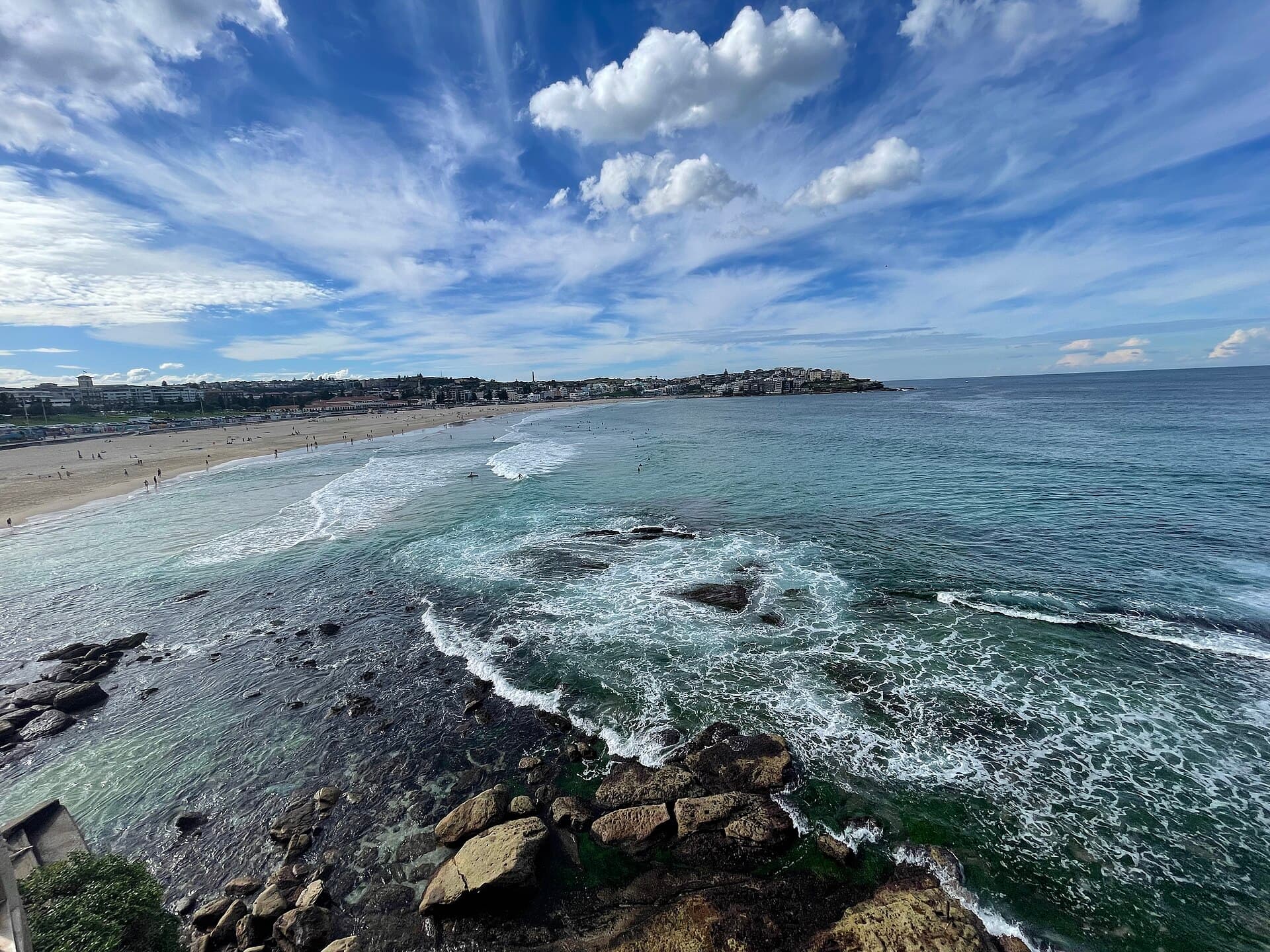
Image: Bondi Beach Sydney — Ttabett, CC BY-SA 4.0. See all image credits.
Every Australian over thirty can hum the slip-slop-slap jingle. Fewer can point to the moisturiser they put on after the sunscreen, or admit they only wear SPF when the car is already pointed at the beach. The Cancer Council did the hard public-health work. The leftover job is cultural: treating ultraviolet light as a weekday fact, and treating the skin barrier as something the sun, wind and office air will keep taxing after the burn risk is managed.
The original eshu copy said the range was built for a climate that would test a face anywhere on the planet. UV is the first test. It is not the only one. A man who slathers SPF 50 and then walks into a 14-per-cent humidity afternoon in Mildura will still finish the day with a tight, shiny forehead. Protection and repair are different verbs.
What the ozone story actually left us
The Antarctic ozone hole is not a 1980s nostalgia item. It is a monitored geophysical event, and southern-hemisphere UV remains higher than the equivalent latitudes in Europe. Childhood campaigns existed because melanoma and keratinocyte cancers are not rare here. If you have a family story about a neighbour's ear or a cricket mate's shoulder, that is epidemiology, not folklore.
None of that means you need a clinic laser before you are forty. It means the baseline habit is boring and daily. Hat when the index is ugly. Shirt that is actually a shirt. Sunscreen on the face, ears, neck and the V of a work polo. Reapply if you are sweating or towing a boat. We will not relitigate the chemistry of zinc versus chemical filters in this essay; both work when the volume on the skin is honest.
What we will relitigate is the idea that sunscreen is a complete regime. It is a shield. Under it, the barrier still loses water. Over it, salt and sebum still sit. Beside it, wind still strips.
The weekday UV that does not look like holiday UV
A Saturday at Bondi is obvious. A Tuesday in a west-facing tradie ute is not, until the left arm tells on you in October. Driving UV is a classic Australian pattern: one side of the face, one forearm, the ear that sits by the window. Office workers get a milder version on the walk from the multi-storey.
Cloudy Melbourne in November still posts indexes that would surprise a visitor from Hamburg. High altitude days in the Snowies punch above their temperature. Reflected light off concrete, water and pale sand is why a nose burns under a cap brim.
If you only remember one number, remember this: look up the UV index the way you look up whether to take a jumper. The Bureau and the Cancer Council both publish it. Over 3, you are in the daily-SPF conversation. Under 3, you can be more relaxed — not absent-minded.
Where the moisturiser earns its keep
Sunscreen formulas have improved, but many still sit on the skin as a film. That film does not replace the lipids you lose to air-conditioning and inland wind. A separate moisturiser — morning and night, or at least night — is the unfashionable habit the old eshu bottles were built around.
In the south, winter is when men suddenly discover they have "sensitive skin". They do not. They have a heater and a barrier that has been running on fumes since the first northerly. A cream with some occlusive character (look for dimethicone, petrolatum in small doses, or a plant oil that does not stay greasy — macadamia is the local candidate) will do more than a new toner.
In the north, the moisturiser has to be light enough that you will not skip it. A gel-cream after a night shower is a regime. A jar that feels like cold cream in Darwin in November is a paperweight.
Texture is climate-specific. Brand loyalty is optional. See why Australian skin needs a different rulebook if you are still copying a routine written for Oregon.
Application, not aisle philosophy
Most SPF failure is volume. A pea-sized blob on a grown man's face is theatre. Two-finger lengths of cream for face and neck is closer to the dermatology teaching. Ears and the back of the neck are not optional extras; they are where hats fail.
Moisturiser failure is timing. Put it on damp skin after a shower and it has water to hold. Put it on a face you just towelled like a windscreen and you are sealing dryness. At night, clean first. In the morning, moisturiser then sunscreen, or a moisturiser that truly is an SPF if you will apply enough of it.
Do not stack five antioxidants because a podcast said so. One decent moisturiser and an honest sunscreen beat a bathroom shelf you will not maintain on a 5 a.m. shift. That is the simple regime in one line.
When UV damage is already written
Freckling, broken capillaries, a leathered neck, a lower lip that always splits — these are diaries. They do not require shame and they do not require a ten-thousand-dollar device as step one. They require the daily habit starting now, a hat, and a low threshold for getting a changing lesion checked. When to see a GP is the companion piece.
If a spot is new, changing, bleeding, or just ugly in a way its neighbours are not, that is not a moisturiser question. Book the clinic.
A short weekday protocol
Wake. Rinse or cleanse if you are oily or you trained. Moisturise. Sunscreen in a quantity that would annoy your younger self. Hat if you are outside at lunch. Evening: wash off the day, including the sunscreen, then moisturise again. Twice a week, a mild exfoliant if your skin tolerates it — not the night before a long day in the sun.
That is the whole sermon. The ozone hole made the sermon necessary. The moisturiser is how you stay comfortable enough to keep preaching it to yourself in July.
Questions we keep getting
- Do I still need SPF when it is cloudy in Melbourne?
- Yes. Clouds cut some UV, not enough to retire the bottle. Winter UV in southern cities is lower, not zero, and car-park glare still finds a nose.
- Can a moisturiser replace sunscreen?
- Only if it is an actual SPF product used at sunscreen quantities. A dab of tinted moisturiser is not a Cancer Council campaign.