Home/Journal/Native Botanicals
Quandong, desert lime and forgotten natives
Beyond Kakadu plum and tea tree sits a cupboard of fruit with real chemistry and thinner evidence. How to meet them without collecting a cartoon bush.
Tom Adebayo · · 11 min read

Image: Citrus australasica — Rjk, public domain. See all image credits.
Walk a Melbourne grocer in winter and you may find finger lime pearls next to the oysters. Walk a cosmetics aisle and you will find the same fruit, plus quandong, desert lime, Davidson plum and a half-dozen leaves, asked to redeem a lotion. Some of these plants have chemistry worth talking about. Most of the bottles have a word count worth talking about.
The original eshu pages stuck to a short list and a serious climate. That remains the house taste. This essay is a map of the second shelf: what the plants are, what has been measured, and how to avoid buying a larder.
Finger lime, the one that already left the bush
Citrus australasica is the success story. Chefs did the cultural work. The vesicles are fun. The peel oils are citrus oils, with the usual phototoxic cousins in the family if someone were foolish enough to put cold-pressed peel on a face and then walk to Bondi. Formulated extracts in a moisturiser are a different object: a little vitamin C talk, a little scent, a little story.
Treat it as citrus, not as a miracle. If you already know you react to bergamot or cheap lemon, be cautious. If you want ascorbic acid with a straighter face, Kakadu plum still has the louder file.
Quandong, the sandalwood cousin
Desert quandong (Santalum acuminatum) is a sandalwood relative with a red fruit that inland people have eaten for a very long time. The kernel oil shows up in some "bush" ranges. The evidence in dermatology is thin compared with the kitchen evidence. That does not make it fake. It makes it early.
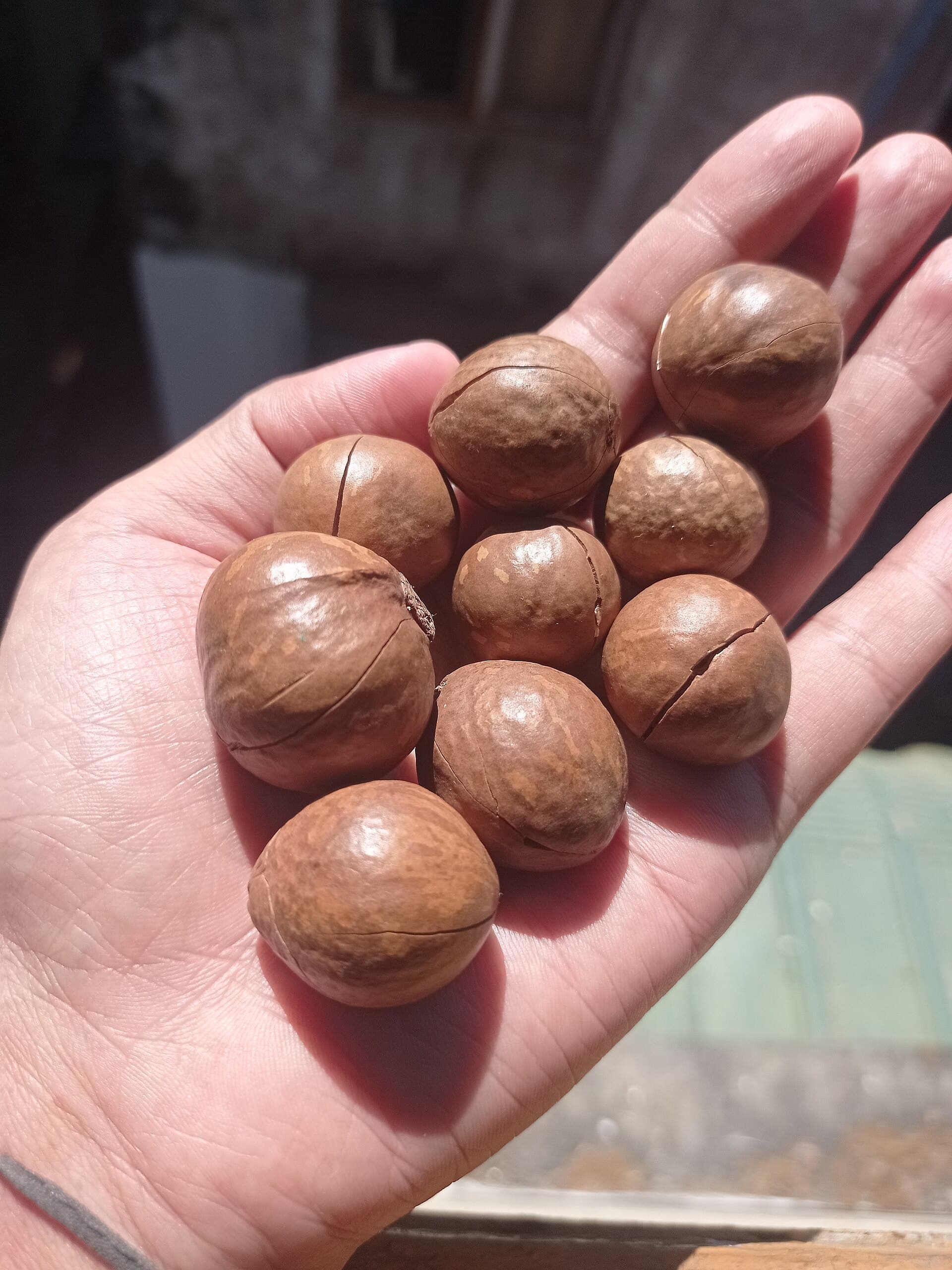
If you buy a quandong oil, you are buying a lipid and a supply chain that should name its harvesters. You are not buying a peer-reviewed wrinkle protocol. Use it the way you would use macadamia: on damp skin, in a climate that wants oil, and not as a sunscreen.
Desert lime and the sour cupboard
Desert lime (Citrus glauca) is another true citrus, small and fierce. It has food uses and a vitamin C reputation. In cosmetics it is usually a flavour of extract. Same rules: cameo versus inclusion, fragrance versus function, label literacy.
Davidson plum, riberry, muntries — you can collect these names like footy cards. A journal will not stop you cooking with them. A journal will stop you believing a 0.01 per cent extract is a clinical.
Traditional use is a source, not a sticker
Many of these plants sit inside living Aboriginal food and medicine systems. That is the interesting fact. The uninteresting fact is a brand using the word "ancient" as a synonym for "untaxed by evidence". If a company has a partnership, they can say so. If they have a licence to a story, they can say whose. If they have a powder from a broker, they can say that too.
We are not the regulator. We are the people who will keep asking.
How to try one without rearranging the bathroom
Change one product. Give it two weeks. Keep the simple regime underneath: cleanse, moisturise, protect. Do not add a forgotten native in a week you also started an acid and a new beard oil. You will not know what bit you.
Climate still edits the result. An oil-rich quandong cream that feels heroic in inland air may stew on a Cairns neck. A citrus-scented gel may be perfect after surf and rude after a shave.
The house shortlist
If you want natives that have already survived our scepticism: Kakadu plum for an antioxidant story with numbers, tea tree for a formulated antiseptic, lemon myrtle for a polite scent, macadamia for a lipid that behaves. The rest of the cupboard can come to dinner. It does not get to rearrange the furniture.
A forgotten plant is not a better plant. It is a plant that has not yet been asked to do too much. Let us keep it that way until someone runs the work.
Cooking is still the better first date
If you are curious about a plant, eat it in a kitchen that knows it before you wear it. A finger lime on oysters will teach you more about the fruit than a 0.2 per cent extract. A quandong jam, if you can find one from a producer who names a place, is a better cultural object than a shower gel.
Then, if you still want it on a face, apply the label method and the one-product rule. The cupboard will always grow. Your bathroom does not have to. A forgotten native deserves better than to become this year's sticker. Let the serious inclusions — plum, tea tree, myrtle, macadamia — hold the shelf, and let the rest stay interesting.
A week of doing it, not decorating it
The useful test is seven days, not a new bottle. Write the weather in the morning — hot, dry, humid, recycled — and match the texture you already own. If you add anything, add it on day one only, and leave the rest of the cabinet alone so you can tell what changed.
Keep a photograph in the same bathroom light on day one and day seven. Not for social media. For honesty. Tightness, shine, a rash, a nick that will not settle: those are data. If the week is worse, stop the new thing. If the week is calmer, you have a habit, not a personality.
Carry the smallest version of the habit out of the house. A cream in a bag beats a perfect bathroom you do not visit at lunch. A hat on the seat beats a speech about UV. A hose, a tap, a rinse: the unglamorous verbs still do the work the aisle keeps trying to rename.
Tell one other person the plan if you live with them. Shared soap and shared towels will undo a careful face. Shared cream at the sink will save a pair of hands. This is not intimacy advice. It is logistics.
Workdays will try to steal the plan. A meeting runs late, a site has no tap, a roadhouse soap is a joke. That is why the plan has to be small enough to survive a bad Tuesday. Two steps plus sunscreen will travel. A ten-step will stay in the bathroom and sulk.
On the weekend, resist the urge to "catch up" with a peel, a device, or three natives at once. Catching up is how faces go red before a Monday. Repeat the weekday verbs. If you have sport, rinse sooner. If you have a long drive, wear the sleeve. If you have a roster, pack the pouch before you are tired.
If at any point the skin becomes a story you would not tell a barber — spreading, bleeding, changing, painful, febrile — you are no longer in a journal. You are in a waiting room. Take the timeline. Take the bottle. Leave the forum theories in the car.
The rest is repetition. Climate first. A wash that ends. A cream that matches the air. A sunscreen you will finish. Native ingredients that survive a label reading. Paid words declared, with rel=sponsored where money sat down. That is enough week, and enough continent, for this essay to end on.
Questions we keep getting
- Is finger lime just a pretty citrus?
- It is a citrus with a good vitamin C and oil story, and a texture chefs love. In a moisturiser it is usually an extract or an oil fraction, not a bowl of pearls.
- Should I buy a product because it lists five bush foods?
- No. Five cameos are weaker than one honest inclusion. Read the INCI, not the mood board.